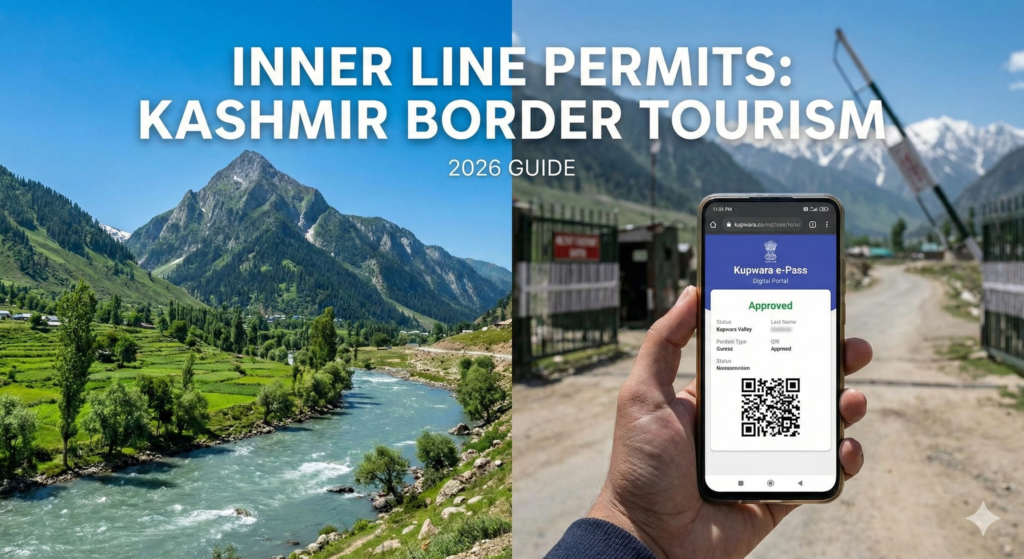
Picture this: You have just landed in Leh. The air is crisp, the mountains are stunning, and you are ready to drive to the breathtaking Pangong Tso. You reach the checkpoint at South Pullu, and the officer asks for your permit. You don’t have one. You have to turn back.
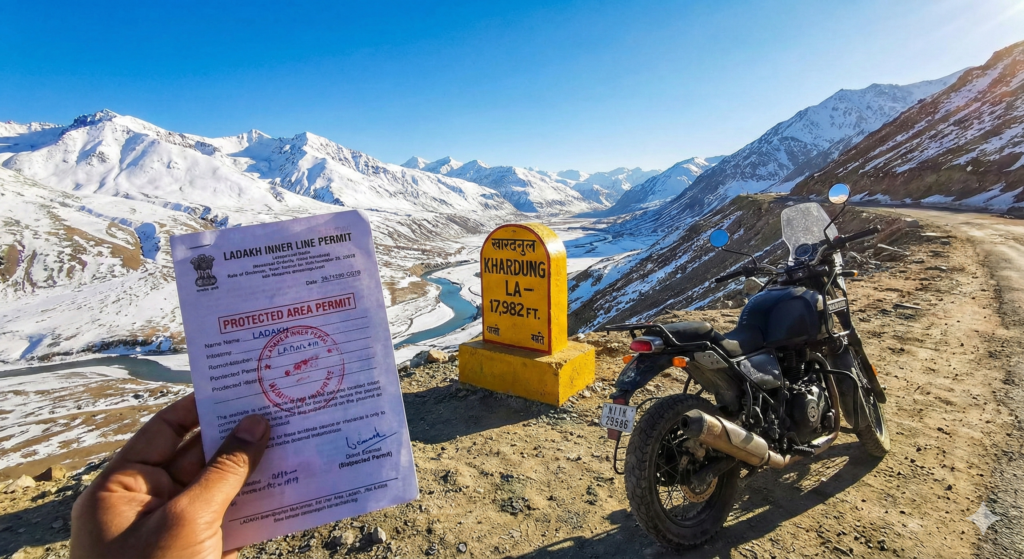
This scenario is a traveler’s nightmare, yet it happens frequently.
Traveling to Ladakh—a strategic border region abutting Pakistan and China—requires navigating specific paperwork. However, the rules have shifted significantly in the last few years, leading to widespread confusion online.
Does an Indian citizen still need an Inner Line Permit (ILP)? What is a Protected Area Permit (PAP)? Which areas are restricted?
This comprehensive guide breaks down everything you need to know to ensure your Ladakh road trip is legal and hassle-free.
The Big Change: The End of ILP for Indians (Sort of)
Before we dive in, let’s clear up the biggest source of confusion.
In August 2021, the Ladakh Administration officially removed the requirement for an Inner Line Permit (ILP) for Indian citizens.
HOWEVER, this does not mean you can just drive anywhere freely.
While the document is no longer technically called an “ILP” for domestic tourists, it has been replaced by a mandatory Environment Fee and Wildlife Fee. You must pay these fees online and carry the payment receipt, which functions exactly like the old permit used to. Checkpoints will still stop you and demand to see this document.
For the sake of simplicity, many locals and travelers still colloquially refer to this fee receipt as a “permit.”
Which Areas Require a Permit/Fee Receipt?
You do not need a permit just to land in Leh, stay in the city, or visit local sights like Shanti Stupa, Leh Palace, or Hall of Fame. Zanskar Valley is also currently permit-free.
You DO need a permit/fee receipt to travel past the established check-posts towards these restricted zones:
- Nubra Valley (Khardung La, Diskit, Hunder, Turtuk, Tyakshi)
- Pangong Tso Circuit (Chang La, Tangtse, Spangmik, Man, Merak)
- Changthang Region (Tso Moriri/Korzok, Chumathang, Tsaga La)
- Hanle & Umling La (The world’s highest motorable road)
- Batalik & Dah-Hanu (Aryan Villages)
Section 1: The Rules for Indian Citizens (Domestic Travelers)
If you are an Indian national holding a valid government ID (Aadhaar Card, Voter ID, Passport, DL), the process is streamlined.
The Requirement: Environment & Wildlife Fee
As mentioned, you are required to pay green fees to the LAHDC (Ladakh Autonomous Hill Development Council).
The Costs (Subject to minor changes):
- Environment Fee: approx. ₹400 (one-time)
- Wildlife Fee: approx. ₹20 per day per person
- Red Cross Fund: approx. ₹50 (one-time optional donation, often added automatically)
A typical 5-7 day trip usually costs around ₹600 – ₹700 per person.
How to Apply (Step-by-Step)
Option A: Online (Recommended) You can pay these fees before you even arrive in Ladakh.
- Visit the official LAHDC portal (search for “Ladakh Lahdcit permit portal”).
- Click on the “Domestic Traveler” section.
- Fill in details for all passengers (Name, State, Photo ID type and number).
- Select the circuits you plan to visit (e.g., Nubra, Pangong, Tso Moriri). Tip: Select all major circuits even if you aren’t sure, as it costs the same and offers flexibility.
- Pay the fees online via net banking, credit card, or UPI.
- Crucial Step: Download the PDF receipt. You MUST print out 5-6 copies of this receipt.
Option B: Via Agent/Hotel in Leh If you find the online portal confusing or glitches occur, almost any travel agent or hotel reception in Leh can get it done for you once you arrive. They will charge a small service fee (usually ₹200–₹300 extra per person) over the actual permit cost.
Section 2: The Rules for Foreign Nationals (International Travelers)
If you hold a non-Indian passport (including OCI/PIO holders), the rules are stricter. You are still required to obtain a Protected Area Permit (PAP).
Key Differences for Foreigners:
- You Cannot Apply Directly Online: While the LAHDC portal exists, foreign nationals cannot obtain the final PAP themselves. The application must be routed through a registered travel agent in Leh.
- The “Rule of Two”: Officially, PAPs are issued to groups of two or more foreigners traveling together.
- Solo Traveler Hack: If you are traveling alone, a travel agent in Leh will usually “pair” your application with other travelers to satisfy the paperwork requirement. You don’t necessarily have to travel with them, but your paperwork is linked.
- Validity: PAPs are usually issued for a maximum of 7 to 15 days.
- Restricted Access: While most tourist areas are open, certain hyper-sensitive border areas near the LAC (like certain routes beyond Hanle or specific parts of Chushul) may be off-limits to foreigners, even with a PAP.
How to Apply (Foreigners):
- Arrive in Leh.
- Visit a registered travel agency with your original passport and visa.
- The agent will handle the online data entry and take your documents to the Deputy Commissioner’s (DC) office for verification and stamping.
- This process usually takes half a day (submit in the morning, collect in the evening).
The Golden Rule: Print, Print, Print!
This is the most important practical tip in this entire guide.
Whether you have an Indian Environment Fee receipt or a Foreigner PAP, having it on your phone is not enough. The checkpoints at South Pullu (towards Nubra), North Pullu (towards Pangong), and elsewhere do not have reliable internet/printers.
You must hand over a physical photocopy of your permit at every major checkpoint you pass.
Before leaving Leh, ensure you have at least 5-6 photocopies of your permit for every member of your group.
You may Also read Inner Line Permits for Kashmir 2026
Frequently Asked Questions (FAQs) about Ladakh Permits
Q: Do I need a permit if I am biking from Manali to Leh and just staying in Leh town? A: No. If you enter Ladakh via Manali or Srinagar and only stay in Leh town or transit through to the other side (e.g., Manali to Srinagar via Leh) without visiting Nubra/Pangong, you do not need a permit.
Q: How far in advance can I apply for the permit online (for Indians)? A: The portal usually allows applications a few weeks to a month in advance. However, it is best to apply 2-5 days before your arrival to ensure your dates are firmed up.
Q: Is the online portal reliable? A: It usually works well, but it can sometimes face technical glitches or payment failures. If it doesn’t work after a few tries, don’t panic. Just get it done through your hotel upon arrival in Leh.
Q: Can OCI (Overseas Citizen of India) holders apply as domestic travelers? A: No. OCI holders are treated as foreign nationals for permit purposes in protected areas. You must follow the Protected Area Permit (PAP) process through an agent.
Q: Do I need a permit for Zanskar Valley (Padum)? A: Currently, no permit is required for regular tourist travel to Zanskar. However, if you plan to cross from Zanskar into Leh district via remote routes like the Singge La to Lamayuru, check the latest status locally.
Q: What documents do I need to carry with the permit? A: You must carry the original government ID that you used to apply for the permit (e.g., your original Driving License, Voter ID, Passport, or Aadhaar).
Disclaimer: Rules in border areas change rapidly based on security assessments. While this guide is current as of drafting, always verify the latest regulations with your hotel or a local travel agent upon arrival in Leh